
 Search







#1
in Cyprus Sustainability Impact Ratings 2026
TOP
301-400 Sustainability Impact Ratings 2026

5
Schools
80+
Programs of Study

2
campuses Nicosia Limassol

35+
Research Units

IN THE SPOTLIGHT
Living in our cities
December 5th, 2025
Share:


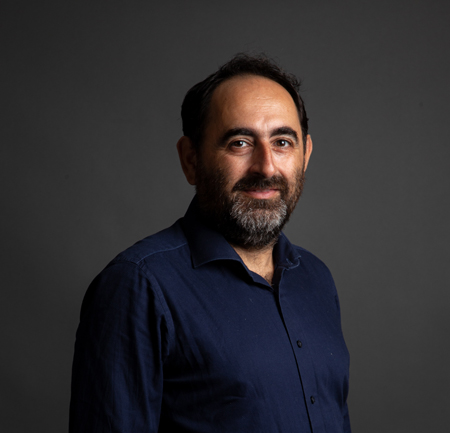 Byron Ioannou, Head of the Department of Architecture, explains why a radical re-evaluation of the way we build our cities is essential.
 "Anyone with basic urban planning knowledge can understand that the historical generosity with which development zones were expanded may have satisfied landowners’ desires, but it also lies at the root of two major land development problems: housing and traffic," says Urban Planning Professor Byron Ioannou, commenting on urban density as proposed in the new local plans for four Cypriot cities: Nicosia, Limassol, Larnaca, and Paphos. "Urban sprawl excessively expanded our cities, making us dependent on cars, while turning idle land into an attractive investment product instead of an opportunity for development."
Commenting that, fortunately, an increasing number of professionals in real estate now align their views with international and European commitments on the environment, energy, and biodiversity, Ioannou explains that, in contrast to the constant occupation of nature and valuable agricultural land, there is a growing focus on increasing urban densities. While expanding development zones has always been an easy, almost careless, choice that simply shifted problems from one generation to the next, the path to increasing densities requires careful planning and coordinated effort for success.
"Two ideas for increasing urban density focus on building coefficients and the so-called minimum floor areas for residential units. How can we maintain the quality of life and amenities in a neighborhood while increasing its potential population? Today, the amenities of densely built central residential areas are supported by an unlimited building coefficient, by the open space, the sky view, and the greenery of a single-family home occupied by elderly residents, or by the vacant plot still generously available for parking under olive trees they planted around the property."
What would happen, then, if mobility patterns like "I drive to the kiosk three times a day" remained unchanged, and our urban neighborhoods fully utilized the building coefficient, compared to the maximum 30-40% of land that is built on today? Do we have enough green space and public areas?
As the Professor notes: "Imagine that under the current system, if I divide 10 plots in a zone like Ka10, where 30 residents will live in small villas, I would provide about 1,000 square meters of public green space. The same amount would be provided in a Ka5 zone, but this time it would correspond to over 150 residents, none of whom would have gardens or yards, but rather fully cemented ground floors. The urban logic for green spaces—and for many other amenities—has remained frozen in the 'Cypriot dream' of the nineties. Back then, every typical household lived in a very specific housing typology, without any real need to match the green space per neighborhood to its population, as most European countries have always done. Naturally, there are many other aspects to consider, like infrastructure. For instance, how will our schools adapt to a potential doubling of the population in their catchment areas? Is there space for neighborhood commerce and services, or even warehouses/distribution centers for e-commerce, which every modern residential area now needs? How do we equip neighborhoods against the risks of climate change and natural disasters? How do we spatially organize the critical issue of recycling at the source, among many other concerns?"
According to Prof. Ioannou, the time has passed when, while identifying flaws in existing residential zones, these were neglected in an attempt to improve the standards of the ones being planned. As the Professor points out: "The positive difference in urban quality can now only be achieved with structural changes to existing urban zones, addressing property norms such as small built or undeveloped plots, unfriendly and disconnected local roads, and scattered green spaces. Only then can the new local plans offer a vision for urban neighborhoods with medium to high building coefficients. Can they turn neighborhoods like Kaimakli, Drosia, or Chalkoutsa into green and smart 15-minute neighborhoods?"
On the matter of building specifications for individual residential developments, how does increasing density impact things?
The Professor responds by posing even more questions: "How modern is the demand for one parking space per apartment, when other European countries are moving in the opposite direction? Isn't it somewhat absurd for a 30m² studio or a 50m² one-bedroom apartment to allocate at least 15m² for parking on the ground floor? We know that the need, where it arises, for underground parking is a likely cause—along with discouraging taxation—that results in land remaining unused in high-density zones. Isn't it a shame that the ground floor, which urban design experts (like Gehl, BIG, etc.) call the 'plinth' of a sustainable and lively city, instead of being the social space and showcase of the building, is fully occupied by parked cars?"
"And yes, living in smaller apartments is, in many ways, reasonable and logical, adapting to the realities of our times. But if we reduce a two-bedroom apartment to 60m² and expect a family to live in it, the development itself must provide a series of shared spaces and significant private green areas that support dignified living. The practice from most European countries have much to teach us."
Finally, can the new local plans promote socially innovative and modern typologies for residential development? Can owning a home in the central urban areas become more attractive and affordable than in the suburbs or new city satellites?
"I think it's very difficult. However, I’m not suggesting that we throw in the towel and continue to turn every hill, dry farmland, and neglected plot of land into new residential zones. In past articles, many colleagues and I placed our hopes on a revolution that would come from the urban renewal law. Unfortunately, with the conditions that have been set, it’s unlikely that this can be implemented quickly or on a large scale with visible results. Therefore, the new local plans need to invent or mobilize tools and mechanisms outside the traditional urban planning framework in order to smartly promote the scenario of increased density, while simultaneously enhancing the living experience in cities. This can be a strategic choice for areas of densification that are equipped with infrastructure (which, of course, needs space), opportunities, encouragement for alternative mobility, and good urban design. Simply increasing the building coefficient cannot be effective without special plans and redevelopment programs, without securing private land for public use, without studying the economic feasibility and applicability of measures and actions. We cannot just increase coefficients without supporting this with new specifications for development, property, and without tax or other non-urban planning incentives. Certainly, such a strategy requires, from the outset, an understanding of its developmental implications with the substantive involvement of the Ministry of Finance. Although the state stopped printing money in 2008, it still generates building coefficients, which represent wealth and a resource that can be leveraged to support any ambitious urban regeneration project."
 View all articles