
 Search



Hydrogen autonomous homes: A new pathway to future energy independence


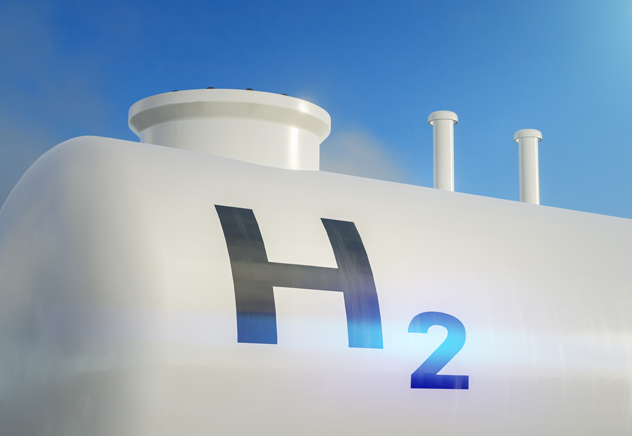
Frederick University's H2Zero Research Unit has developed a novel modeling on “hydrogen autonomous homes”, showing how future houses could run entirely off‑grid using hydrogen fuel cells and on‑site storage while maintaining very high reliability over a 20‑year lifetime.
The study evaluates a complete home energy system powered only by delivered hydrogen, without any connection to the electricity grid.
Unlike existing “All‑in‑One” hydrogen homes that require on-site electrolyzers and renewable generation, this research evaluates a simpler architecture where hydrogen is supplied externally and stored on-site, while electricity is produced via fuel cells. This configuration reduces operational complexity, maintenance requirements and the technical risks associated with intermittent renewable operation, while preserving energy autonomy.
Using advanced optimization and reliability modeling, the research team analyzed a dual Proton Exchange Membrane (PEM) fuel cell system combined with multi‑day hydrogen storage, smart power electronics, and supervisory energy management. The model tracks hourly electricity needs for a typical home over a full year and then optimizes system size, cost, and performance over 20 years. This approach allowed the researchers to quantify both reliability (hours of downtime per year) and long‑term energy costs for different hydrogen price scenarios.
One of the most striking findings is that a properly designed hydrogen home can achieve 99.85% availability, which translates to just 13.1 hours of expected power outages per year. This reliability is achieved by combining a main fuel cell sized with a 25% safety margin above peak household demand and a secondary standby unit rated at 50% of peak load, supported by on‑site hydrogen storage sized for seven days of autonomy. The seven‑day storage window offers resilience against short‑term supply disruptions without the complexity and cost of seasonal‑scale storage.
The study also highlights the economic reality: at today’s representative hydrogen price of around 6 US$/kg of hydrogen, the levelized cost of electricity (LCOE) for the autonomous home reaches about 0.45 US$/kWh, which is still higher than typical residential grid tariffs. The researchers find that hydrogen cost is the key driver, when prices fall below roughly 3 US$/kg, payback periods of about 12-15 years become possible in high‑tariff markets where grid electricity costs exceed about 0.39-0.40 US$/kWh. At higher hydrogen prices in the range of 6-12 US$/kg, payback times can surpass the system lifetime, underlining the need for affordable low‑carbon hydrogen. When hydrogen prices range from 2 to 12 US$/kg, the modeled LCOE varies from approximately 0.33 to 0.64 US$/kWh, illustrating how strongly fuel price shapes long‑term affordability.
Because of these cost dynamics, hydrogen autonomous homes are a targeted solution rather than a universal replacement for grid connections. They appear most attractive for remote communities without grid access, island systems, high‑tariff regions, and resilience‑critical sites where energy security and low emissions are prioritized alongside cost. In such contexts, the combination of multi‑day autonomy, high technical reliability, and zero‑local‑emission operation can justify the current cost premium.
As Professor Andreas Poullikkas, head of the H2Zero Research Unit notes: «Hydrogen autonomous homes will be a vital building block of the energy transition, because they show how households can one day achieve true energy independence without sacrificing reliability. By combining clean hydrogen, advanced fuel cell technology, and intelligent control, these systems point to a future where homes are not just passive consumers, but active, resilient units of a decarbonized energy system».
 View all articles