
 Search



Sustainability Literacy: Developing and Evaluating Students' Understanding of Sustainability


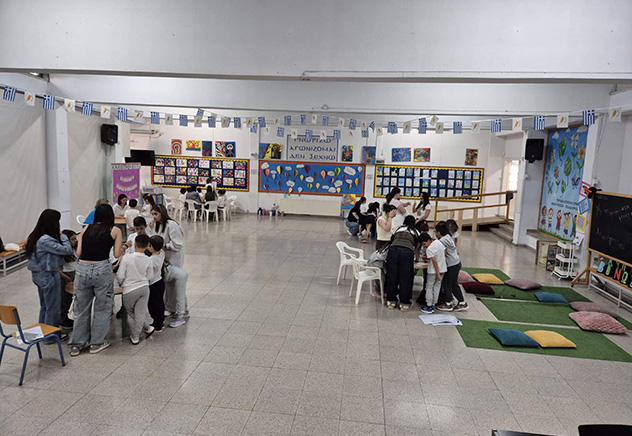
Frederick University recognises the importance of developing sustainability literacy among its students by equipping them with the knowledge, skills and competencies needed to understand sustainability challenges and contribute to a more sustainable future.
The University's approach to sustainability education places emphasis on helping students understand key sustainability concepts, critically examine environmental and societal challenges, and explore how sustainability principles can be applied in practice. Through teaching and learning activities, practical projects, workshops and student engagement initiatives, students are encouraged to connect theoretical knowledge with real-world sustainability issues and develop a deeper understanding of their role in achieving the Sustainable Development Goals (SDGs).
An important component of this approach is Frederick University's Living Lab (FULL), which provides opportunities for students to engage with sustainability challenges in a practical and participatory environment. By bringing together students, academic staff and other stakeholders to explore and address real-life challenges, the Living Lab encourages experiential learning, interdisciplinary collaboration, experimentation and the development of practical solutions. This approach allows students to move beyond theoretical knowledge and actively apply sustainability principles in real-world contexts, strengthening their understanding of sustainability and their ability to contribute to positive change.
Assessing and evaluating students' sustainability literacy
As part of its efforts to evaluate and strengthen sustainability literacy, Frederick University has introduced assessment tools that explore students' development of key competencies associated with sustainability education. In particular, the Critical Thinking Self-Assessment Tool and the Collaboration Self-Assessment Tool are currently administered to students enrolled in courses delivered through Frederick University's Living Lab (FULL). These tools provide insights into students' perceptions of their competencies in critical thinking and collaboration, both of which are essential for understanding complex sustainability challenges, evaluating different perspectives and working collectively towards solutions.
Complementing these initiatives, Frederick University's Department of Education has also developed one questionnaire focusing on systems thinking and one on Futures literacy, within the framework of the European research project GreenCompSchool: Cross-sectoral GreenComp Training of Primary School Stakeholders, for the Promotion of a Sustainability Mindset. The quesionnaires were administered to education students that attended special courses on Systems and Futures Thinking within their courses.
The questionnaire investigates participants' familiarity with systems thinking, understood as the ability to recognise and understand the relationships and interdependencies between different factors within a particular problem or real-life situation, including environmental, social and educational challenges. Similarly the futures literacy questionnaire explores students’ capability to understand, imagine and use different scenarios of the future to make better informed decisions in the present. Both questionnaires seek to establish participants' existing levels of understanding and identify their educational needs in relation to these important sustainability competences. Participation was voluntary and responses were anonymous and confidential, with findings used for research and presented in aggregated form.
Together, these initiatives provide Frederick University with opportunities to assess different dimensions of students' sustainability-related competencies, including critical thinking, collaboration, systems thinking and futures literacy. They move beyond the assessment of factual knowledge to explore competencies that are essential for understanding complex sustainability challenges, recognising interdependencies, critically evaluating different perspectives and developing collaborative solutions. The findings can also help identify learning needs and inform the continuous improvement of teaching and learning approaches.
The importance of experiential and participatory learning in developing sustainability competencies is also supported by the research article Enhancing Sustainability Teaching Competence in Preschool Teacher Education Using Living Labs, by Dr Chrysanthi Kadji-Beltrán, member of the academic staff of Frederick University, published in the journal Sustainability, Volume 16, Issue 7. The study examines the use of Living Labs in sustainability education and highlights the value of practical learning experiences, collaboration, reflection and the application of theoretical knowledge to real-world challenges. Its findings provide an academic basis for approaches that encourage students to actively engage with sustainability issues and develop competencies beyond theoretical understanding.
By combining sustainability education, practical learning opportunities through its Living Lab and assessment initiatives focusing on critical thinking, collaboration, systems and futures thinking, Frederick University seeks to strengthen students' sustainability literacy. These efforts support the development of informed, critical and responsible individuals who can understand, evaluate and contribute to solutions for sustainability challenges. The integration of assessment tools into educational activities also provides opportunities to identify learning needs, evaluate students' perceived competencies and inform the continuous improvement of sustainability education.
 View all articles
